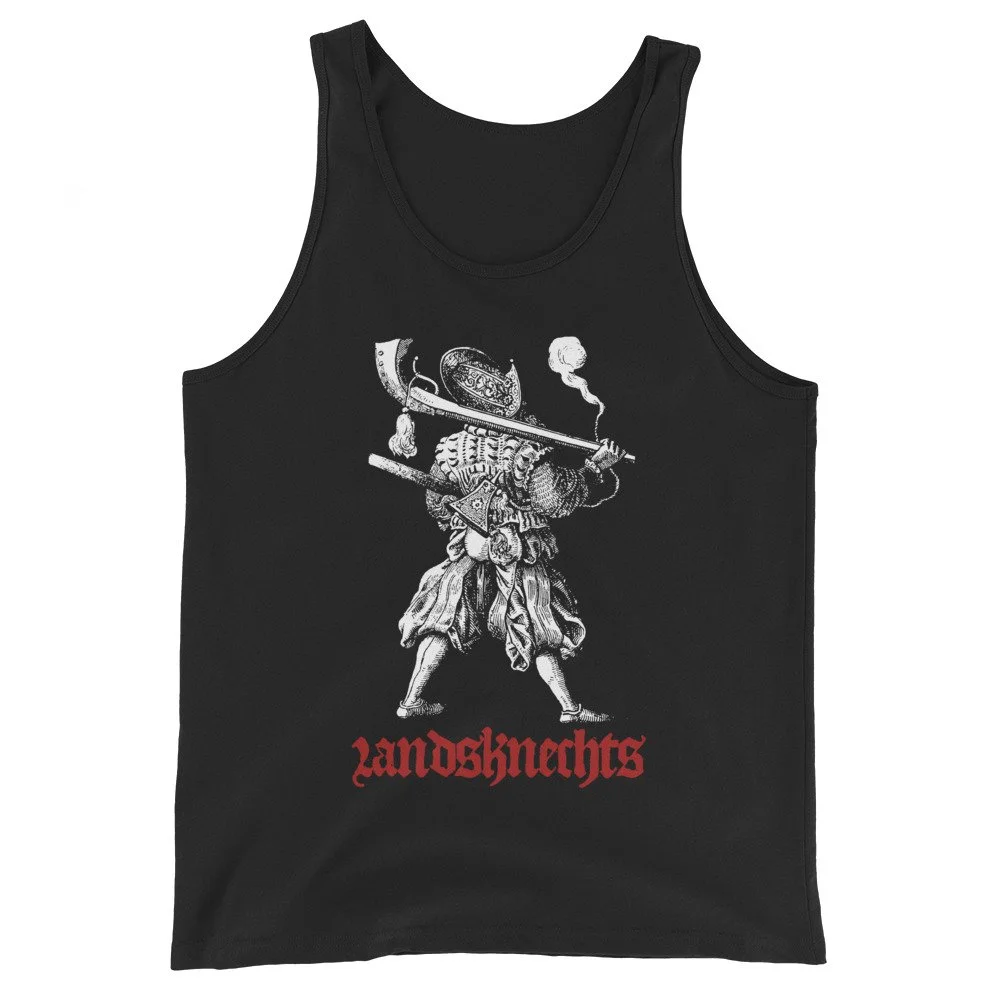
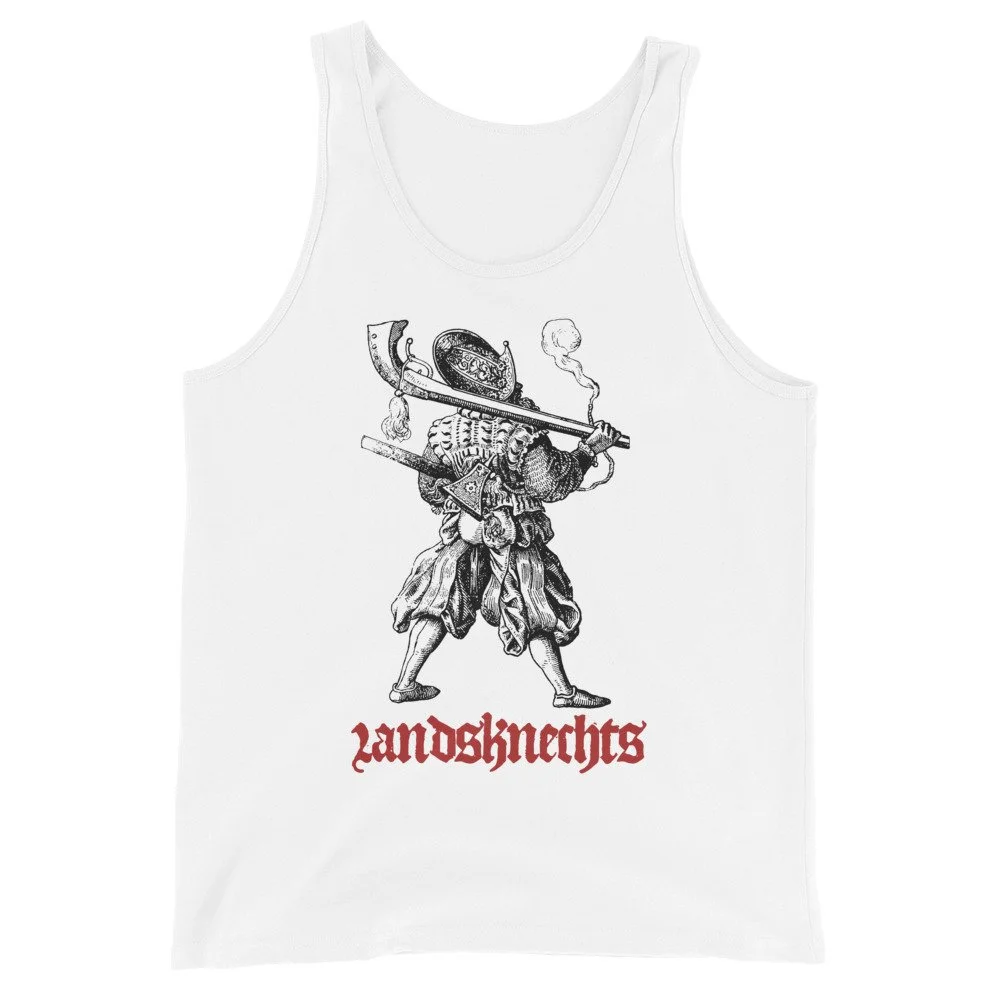
The Landsknechte were well-armed and experienced warriors, recruitable in large numbers throughout Germany and Austria by the Holy Roman Emperor. This guaranteed both quantity and quality to the Imperial military for a century and a half. At their peak during the reign of Charles V von Habsburg, and under the leadership of notable captains such as Georg von Frundsberg and Nicholas of Salm, the Imperial Landsknechts obtained important successes such as the capture of the French King Francis I at the Battle of Pavia in 1525 and the resistance against the Ottoman Turks led by Suleiman the Magnificent at the Siege of Vienna in 1529.
The Landsknechte were well-armed and experienced warriors, recruitable in large numbers throughout Germany and Austria by the Holy Roman Emperor. This guaranteed both quantity and quality to the Imperial military for a century and a half. At their peak during the reign of Charles V von Habsburg, and under the leadership of notable captains such as Georg von Frundsberg and Nicholas of Salm, the Imperial Landsknechts obtained important successes such as the capture of the French King Francis I at the Battle of Pavia in 1525 and the resistance against the Ottoman Turks led by Suleiman the Magnificent at the Siege of Vienna in 1529.